Finding the right warehouse for lease in Central Texas starts with defining your space needs, budget, location, and intended use before you begin your search
- collin656
- 4 days ago
- 8 min read
Finding the right warehouse for lease in Central Texas starts with defining your space needs, budget, location, and intended use before you begin your search. Once those basics are clear, it becomes much easier to compare buildings, avoid costly mismatches, and move quickly when a suitable warehouse, flex, industrial, or office-warehouse property is available.
Central Texas can be a strong fit for contractors, distributors, light manufacturers, service companies, investors, and growing local businesses. But the right building depends on more than square footage. Access, power, loading, parking, lease terms, zoning, and future growth all matter.
This guide walks through what to know before searching for a warehouse for lease in Central Texas, and how to prepare the information a commercial real estate professional needs to help you find the right fit.

Start with the way your business will use the warehouse
Before looking at listings, define how the space needs to function day to day. Two buildings with the same square footage can feel very different once equipment, inventory, workers, vehicles, customer pickup, and storage are involved.
A contractor may need yard space, drive-in doors, and room for trailers. A distributor may care more about dock-high loading, clear height, truck access, and proximity to highways. A service business may need a small office, warehouse storage, and easy access for technicians. A light manufacturer may need power capacity, ventilation, and a layout that supports production.
Write down the basics before starting your search:
Preferred cities or submarkets
Approximate square footage
Intended use of the space
Number of employees on site
Number and type of vehicles
Loading needs
Office space needs
Storage, production, or showroom requirements
Desired move-in date
Monthly lease budget
Lease term preference
This list helps narrow the search fast. It also helps avoid spending time on properties that look good online but fail once the details are reviewed.
Decide how much warehouse space you really need
One of the most common mistakes in warehouse leasing is estimating size too loosely. Too little space can limit operations soon after move-in. Too much space can drain cash flow every month.
Start with your current use. Then add room for growth, staging, equipment, circulation, and any office or customer-facing areas.
Common space categories include:
Business need | Space to plan for |
Inventory storage | Racking, shelving, pallets, aisles, staging |
Contractor operations | Tools, materials, trailers, fleet parking, yard access |
Distribution | Dock doors, packing areas, shipping stations, circulation |
Light manufacturing | Equipment footprint, production flow, power, ventilation |
Service company use | Office, parts storage, vehicle access, technician parking |
Flex use | Warehouse, office, showroom, storage, or light assembly |
A small warehouse for rent Texas search may bring up compact industrial bays, flex units, and office-warehouse spaces. Those can work well for trades, local distribution, e-commerce storage, and field service companies. They may not work for heavier industrial uses, outdoor storage, or high-volume truck traffic.
If you are unsure, measure your current operating area. Include the space you wish you had, not just the space you currently occupy.
Know the difference between warehouse, industrial, flex, and office-warehouse space
Search terms matter. Different property types attract different owners, tenants, lease structures, and use restrictions.
Warehouse space
Warehouse space usually focuses on storage, distribution, loading, and movement of goods. Important details include clear height, column spacing, loading doors, truck court depth, and access to major roads.
Industrial space
Industrial space for lease Texas searches may include manufacturing, heavier service uses, distribution, storage, and trade operations. These spaces may need stronger power, specific zoning, outside storage, or specialized building features.
Flex space
Flex space for lease Central Texas properties usually combine warehouse and office or showroom space. Flex buildings often serve contractors, medical supply companies, technology hardware firms, service businesses, and light assembly users.
Office-warehouse space
An office warehouse for lease can be a practical choice when the business needs both administrative space and warehouse function. Look closely at the office-to-warehouse ratio. A building with too much finished office area may not support enough storage or production space.
The best choice depends on the work being done in the building, not just the label on the listing.

Choose the right Central Texas location
Location affects labor, deliveries, drive time, customer access, and cost. A warehouse space near Austin may offer access to a large customer base and transportation network, but some businesses may prefer nearby communities for cost, availability, or operating fit.
Common location factors include:
Access to highways and major roads
Distance to customers or job sites
Drive time for employees
Delivery routes for vendors and carriers
Trailer and truck maneuverability
Local zoning and use restrictions
Parking for staff, customers, and fleet vehicles
Proximity to suppliers
Room for future expansion
For businesses based near Cedar Park, Leander, Round Rock, Georgetown, Pflugerville, Hutto, Austin, San Marcos, Temple, Belton, Killeen, New Braunfels, or surrounding areas, even a few miles can affect daily operations. A cheaper lease farther away may cost more in fuel, labor hours, delivery delays, and service coverage.
If your business serves a wide Central Texas territory, mark your customer or job-site clusters on a map. Then compare warehouse locations based on drive patterns, not just city names.
Set a realistic budget before touring properties
Warehouse lease costs can include more than base rent. Depending on the lease structure, tenants may also pay expenses such as property taxes, insurance, common area maintenance, utilities, repairs, trash service, security, or other operating costs.
Do not compare properties by rent alone. Ask what is included and what is separate.
Budget items to review include:
Base rent
Estimated operating expenses
Utilities
Internet and communications
Insurance
Interior improvements
Racking, equipment, or fixtures
Moving costs
Signage
Security systems
Permits or inspections
Maintenance responsibilities
A lower base rent may not be the better deal if the building needs major work or if operating expenses are high. A higher rent may make sense if the property reduces drive time, supports growth, or requires fewer improvements.
For any commercial property for lease Central Texas search, make sure the monthly occupancy cost fits your cash flow. The right property should support the business, not strain it.
Check building features before you fall in love with the space
Photos rarely tell the full story. A warehouse may look clean and available, but specific details can determine whether it works.
Before touring, ask for available information on:
Total square footage
Warehouse square footage
Office square footage
Clear height
Dock-high doors
Grade-level doors
Truck court and turning area
Power service
HVAC coverage
Sprinkler system
Restrooms
Parking count
Yard or outdoor storage options
Internet availability
Signage rules
Zoning and allowed uses
Lease term requirements
Condition of roof, slab, doors, and lighting
Building condition matters. Look for signs of water intrusion, poor lighting, uneven floors, damaged doors, tight truck access, and layouts that could slow operations.
If the business uses equipment, storage racks, lifts, compressors, refrigeration, wash bays, or specialized systems, confirm early whether the property can support them.

Understand zoning, permitted use, and lease restrictions
A property can look perfect and still be wrong if the intended use is not allowed. Central Texas cities and counties may treat industrial uses differently. Business parks and landlords may also have their own rules.
Confirm whether the property allows your use before investing too much time.
Uses that may need closer review include:
Automotive work
Welding or fabrication
Food production
Outdoor storage
Construction yard use
Heavy equipment storage
High-traffic customer pickup
Hazardous materials
Noise, odor, or dust-producing operations
Manufacturing or assembly
Truck parking
Do not assume a previous tenant’s use means your use will be approved. Always verify the current restrictions, and when needed, speak with the appropriate local authority or a qualified professional.
A Texas warehouse leasing agent can help ask the right questions early, so you do not spend time negotiating a space that cannot legally support the business.
Compare lease terms beyond the monthly rent
Lease language often matters as much as the property itself. Terms should match the business plan, timeline, and risk level.
Review these items carefully:
Lease start date
Possession date
Rent commencement date
Lease length
Renewal options
Annual rent increases
Expense pass-throughs
Maintenance duties
HVAC repair or replacement responsibilities
Roof and structural responsibilities
Tenant improvement allowance, if any
Signage rights
Parking rights
Sublease or assignment rights
Personal guaranty requirements
Default terms
Restoration requirements at move-out
If improvements are needed, clarify who pays, who manages the work, and when rent begins. A space that needs walls removed, electrical upgrades, restrooms added, or warehouse lighting improved may require more time and money than expected.
This article is for general information only. Lease documents create legal and financial obligations, so review them with qualified legal and financial professionals before signing.
Prepare the information Interweb Realty needs to help you search
The more complete your requirements are, the easier it is to identify properties worth reviewing. Interweb Realty provides commercial real estate services in Texas, including support for businesses looking at warehouse, industrial, flex, and other commercial real estate Central Texas opportunities. The company also works with residential property, ranch land, and investment real estate.
Interweb Realty cannot assume a property is available without checking the active listing status. It also should not guess at lease rates, incentives, or property conditions without current information. That is why a clear search profile helps.
When reaching out about Interweb Realty commercial real estate services, include:
Preferred location or service area
Minimum and maximum square footage
Monthly budget or rent range
Intended use
Number of employees or vehicles
Loading requirements
Office area needs
Parking or yard needs
Special power, HVAC, or equipment needs
Desired move-in date
Lease term preference
Whether you are already represented by another broker
A short example request could look like this:
We need 4,000 to 6,000 square feet of warehouse or flex space in the Cedar Park, Leander, or Round Rock area. We need one grade-level door, light office space, parking for service vehicles, and a move-in date within the next few months. Our use is storage and dispatch for a contracting business.
That level of detail helps a commercial real estate professional filter options and ask better follow-up questions.
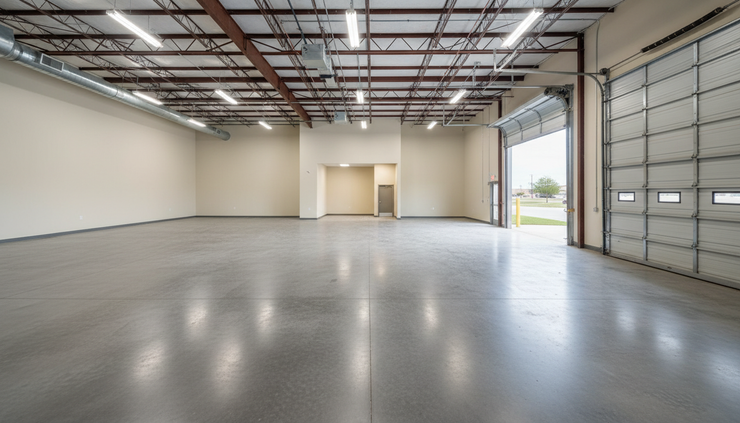
Tour properties with a practical checklist
A warehouse tour should be more than a walk-through. Bring a checklist, take photos if allowed, and picture a normal operating day inside the space.
During the tour, check:
Can trucks enter, turn, load, and exit safely?
Is the clear height enough for storage or equipment?
Are dock doors or grade-level doors the right type?
Is the office area too large, too small, or just right?
Does the power appear suitable for the intended use?
Is there enough parking for staff, visitors, and vehicles?
Are restrooms, lighting, and HVAC in usable condition?
Is there room for staging, packing, or workflow?
Are neighboring tenants compatible with your use?
Are there signs of leaks, damage, or poor maintenance?
Will signage and visibility meet business needs?
Can the business grow in the space during the lease term?
After each tour, rank the property. Use simple categories:
Rating | Meaning |
Strong fit | Meets the key requirements and budget |
Possible fit | Needs more review or better lease terms |
Weak fit | Has clear issues that may hurt operations |
Not a fit | Fails on location, use, layout, cost, or timing |
This keeps the decision grounded. It also helps compare properties after several tours.
Move quickly when the right property checks the boxes
Good warehouse, flex, and industrial spaces can receive attention from more than one tenant. That does not mean rushing into a bad lease. It means being prepared.
Before you submit a proposal, have these items ready:
Legal business name
Business ownership information
Intended use description
Financial references or requested documents
Insurance contact
Timeline for occupancy
Key lease terms you need
Improvement requests
Signage or access requests
A prepared tenant looks more serious and can respond faster when a property fits. That can matter when comparing a strong Central Texas warehouse for lease against other options in the market.
Get help before the search becomes expensive
Finding the right warehouse is not just about searching listings. It is about matching the property to the real operating needs of the business.
Interweb Realty provides commercial real estate services in Texas and can help businesses think through location, size, use, property type, and lease questions before they spend time touring spaces that do not fit.
To start a focused search, send your preferred location, square-footage requirement, budget, intended use, and desired move-in date to info@interwebrealty.com or visit https://www.interwebrealty.com/.
A clear search profile gives Interweb Realty the information needed to help review suitable commercial real estate options in Central Texas and guide the next step with current property information.

Comments